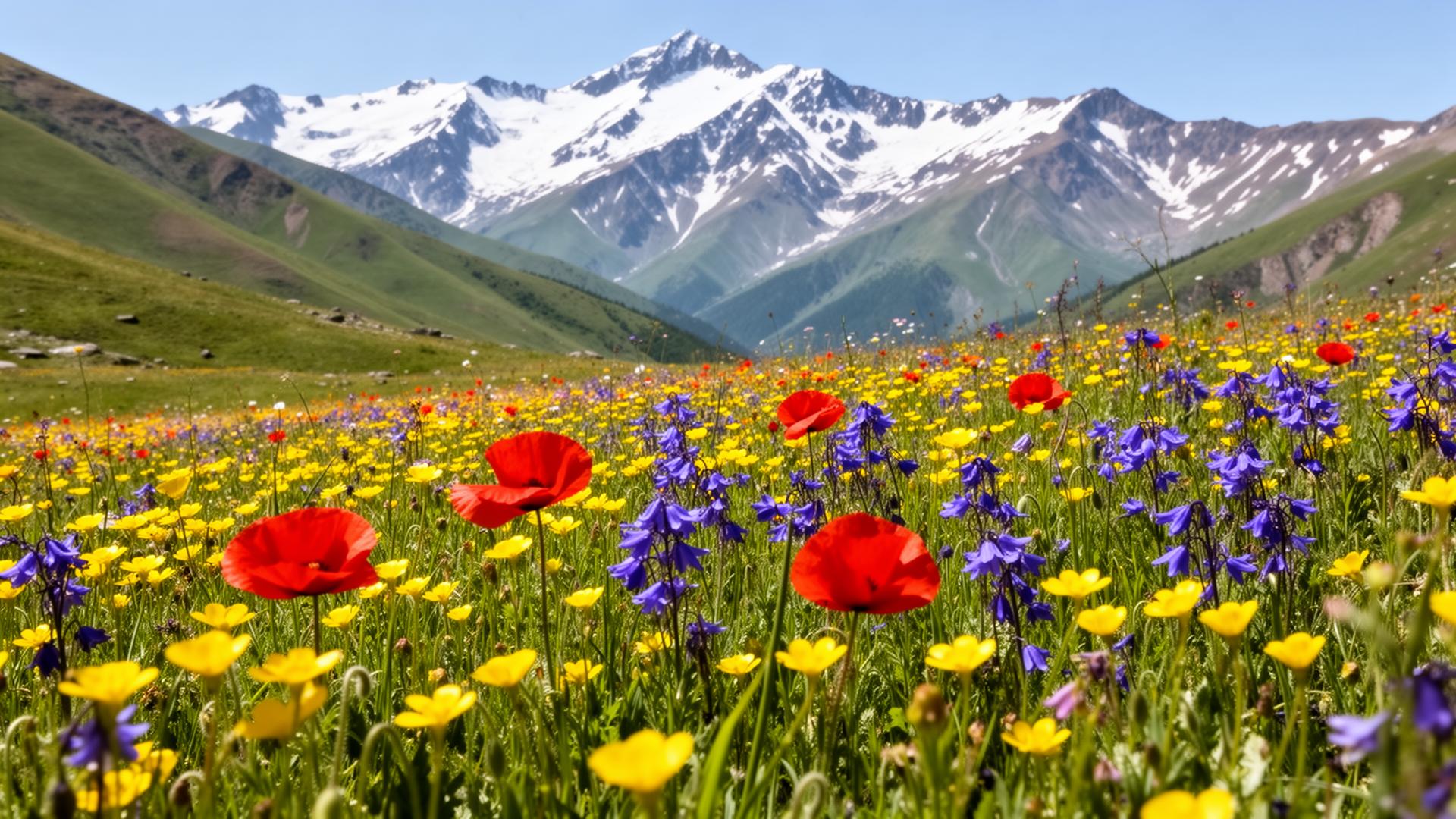
The Caucasus Biodiversity Hotspot is one of 36 regions on Earth identified as critical for global plant conservation. Georgia sits at the heart of it. Within a country smaller than South Carolina, you will find semi-desert scrubland, subtropical wetlands, alpine meadows above 3,000 metres, and temperate forests that carpet entire mountain ranges. The result is roughly 6,400 plant species, many of them endemic, blooming in overlapping waves from early March through late August.
This is not a botanical inventory. It is a driving guide. Every location below is reachable by car, organized not by species name but by the kind of trip you want to take.
How the Bloom Calendar Works
Georgia's wildflower season moves uphill. Lowland blooms (under 800 metres) peak in March and April. Mid-elevation forests and valleys (800 to 1,800 metres) hit their stride in May and June. Alpine meadows above 2,000 metres don't reach full colour until late June through August. Planning a road trip along this elevation gradient lets you chase spring for four months straight.
A practical rule: if you can only visit once, the last week of May through mid-June catches the overlap between fading lowland colour and the first alpine blooms. October visitors should note that purple colchicums (autumn crocuses) appear on mountaintops in the west, extending the season beyond what most guides mention.
Roadside Blooms You Can See Without Hiking
Poppy Fields South of Tbilisi
In May, carpets of wild poppies (likely Papaver lateritium, a Caucasus endemic) appear along railway embankments and open fields around Marneuli, about an hour south of Tbilisi. The blooms last two to three weeks and are best photographed in early morning light. Combine with our Kvemo Kartli road trip to Bolnisi and the Dmanisi archaeological site.
Fruit Orchards in Kakheti
Late March through early April, the fruit orchards around Gurjaani and Chumlaki erupt in pink and white blossoms. Peach, almond, and cherry trees line the roads through the Alazani Valley. The timing is unpredictable. The entire display can come and go in a week. For a wine-and-blossoms combination, base yourself in Telavi.
The Gombori Pass in Spring
The winding road from Tbilisi to Telavi climbs through dense beech forest that produces a canopy of pale green in April and wildflowers along the verges in May. No hiking required. Just slow down and pull over at the unmarked viewpoints.
Wisteria and Magnolias in Georgia's Cities
In Tbilisi, April belongs to wisteria. Purple cascades drape over every balcony, fence, and drainpipe in the Old Town. The National Botanical Garden and 9 April Park show magnolias from late March. In Kutaisi, the famous magnolia near the Red Bridge is the unofficial signal that spring has arrived. See our Tbilisi spring guide for specific locations.
Day Hikes with Wildflower Payoffs
Algeti National Park: Chamomile and Wild Sage
West of Tbilisi (about 90 minutes by car), Algeti's marked trails pass through meadows of chamomile, wild sage, thyme, and rhododendron from late May. The park is small enough for a half-day visit. Combine with the Didgori Battle Memorial on the drive back.
Sololaki Ridge Above Narikala: Urban Wildflowers
You don't even need a car for this one. In May, red poppies, dandelions, and wild grasses cover the ridge above Narikala Fortress in Tbilisi. The Kojori trail, accessible by city bus, produces chamomiles, wild orchids, and edible wild asparagus.
The Rkoni Valley: Chestnuts and Forest Floor Colour
A gentle trail from Rkoni village follows the Tedzami River to a medieval monastery and stone bridge. In late April and May, the forest floor is scattered with spring flowers beneath the chestnut canopy. About 90 minutes from Tbilisi. See our day trips guide.
Didgori Valley: Rolling Wildflower Hills
In late June and July, the hills around the Didgori Battle Memorial southwest of Tbilisi are covered in yellow and purple wildflowers. The metallic cross-sword monuments rising from flower-covered slopes make for extraordinary photographs.
National Park Expeditions
The Semi-Desert in Spring: Udabno and David Gareja
This one surprises people. The arid landscape southeast of Tbilisi, normally baked brown, transforms in March and April. Flowering cherry and plum trees create vivid contrast against red-brown earth around the David Gareja cave monasteries. Look for Iris iberica (a rare Caucasus endemic with distinctive purple-veined petals) and red pheasant's eye flowers growing wild on the hillsides. By May, the heat returns and everything dries out. A standard car handles the main road.
Vashlovani: Pistachio Trees and Mud Volcanoes
Near the Azerbaijan border, this protected area is stifling in summer but alive with colour in April and May. Wild pistachio trees (Pistacia mutica) put out fiery red buds. Several rare and endangered species grow in the gorges. A 4x4 rental is essential for the unpaved tracks inside the park.
Kolkheti Wetlands: Water Lilies and Buttercups
On the Black Sea coast near Poti, Georgia's only UNESCO-listed natural site preserves ancient Colchic wetlands with yellow water lilies poking above still water. The lake shores are carpeted with buttercups in April and May. Reachable from Batumi or Kutaisi in about two hours.
Borjomi-Kharagauli: Mixed Forest Colour
One of the oldest national parks in the Caucasus. Lower-elevation trails through mixed beech, oak, and fir forest produce spring wildflowers from late April. The park stays accessible later into the season than high-mountain alternatives, making it a good mid-May option. Combine with a day in Borjomi town for mineral springs.
High-Altitude Summer Meadows
From late June through August, Georgia's alpine zones above 2,000 metres produce the most spectacular wildflower displays. These require either long drives or proper hiking, but the payoff is enormous.
Kazbegi, Juta, and Truso Valleys
The valleys branching off the Georgian Military Highway produce bluebells, gentians, primulas, and bistorts from late June through July. The hike to Gergeti Trinity Church passes dwarf catnips and star-of-Bethlehem shrubs. The Juta Valley is the most flower-rich, with rolling meadows accessible by a short (but rough) side road from the main highway. The Truso Valley adds marsh marigolds and whitlow grass to the mix. Drive from Tbilisi in about 3 hours.
Svaneti: Mountain Meadows Below the Glaciers
The valleys around Mestia and Ushguli fill with pink anemones, yellow azaleas, and dozens of other species from late June through July. The Mestia to Ushguli road (now paved) passes through meadows at their peak. Higher trails like Koruldi Lakes and Chalaadi Glacier offer alpine flowers alongside glacier views. See our Svaneti road trip guide.
Tusheti: Wild Thyme Above the Treeline
Georgia's most remote mountain region. Spring arrives late, making Tusheti one of the best high-altitude flower destinations through the entire summer. Rhododendrons bloom first in June, followed by rich alpine meadow flowers by mid-July. Khondari (wild thyme) grows everywhere. Families in Dartlo and Omalo pick the purple flowers to brew herbal tea. The drive over the Abano Pass requires a serious 4x4 vehicle.
Javakheti Plateau: Volcanic Lake Flowers
The high volcanic plateau in southern Georgia produces wildflowers all summer thanks to its altitude. Yellow star-of-Bethlehem and pasque flowers grow around the crystal lakes. The Doukhobor village of Gorelovka, with blue houses painted with floral motifs, is the most photogenic stop.
The Lesser Caucasus: Upper Adjara to Samtskhe-Javakheti
The mountain road from Batumi through Keda and Khulo passes cascading waterfalls and flowering slopes. The high elevation means flowers persist into August. A 4x4 is recommended for the Goderdzi Pass section.
Late-Season Surprises
Bakuriani Orchids (April)
Georgia has 51 orchid species. The meadows around the Bakuriani ski resort and nearby Tabatskuri Lake are a known hotspot for Orchis caucasica (Lady orchids), along with wild peonies and purple mullein. About two hours from Tbilisi. Combine with Borjomi.
Mount Khvamli Colchicums (August to September)
Purple colchicums (autumn crocuses) bloom at the summit of Mount Khvamli in western Georgia, extending the wildflower season into early autumn. The trailhead is about an hour from Tskaltubo, making it one of the best day hikes near Kutaisi.
Shkmeri Alpine Meadows (May to June)
This remote Racha village (birthplace of shkmeruli chicken) is a documented wildflower paradise. Hound's tongues, marsh orchids, trumpet gentians, spotted nettles, and striped squills have all been recorded here. Hiking trails lead to dramatic viewpoints.
Planning Your Wildflower Road Trip
Most lowland spots (Marneuli poppies, Kakheti orchards, Algeti park) are accessible in any car. A Hyundai Elantra handles paved routes perfectly. For national parks like Vashlovani and mountain destinations like Tusheti, you need a 4x4 like a Jeep Wrangler or Toyota 4Runner.
We deliver free to any address in Tbilisi, Kutaisi, Batumi, and all airports. No deposit, unlimited mileage, prices from €40/day.
For more seasonal planning, see our spring guide, our month-by-month weather guide, or our region-by-region destination guide.
Frequently Asked Questions
When is the best time to see wildflowers in Georgia?
Late May through mid-June catches the overlap between fading lowland blooms and the start of alpine flowers. For lowland displays only, April is peak. For high-mountain meadows, aim for late June through July.
Do I need a 4x4 for wildflower destinations?
Not for most locations. City blossoms, roadside poppies, Kakheti orchards, and lower national parks are all accessible by sedan. Vashlovani, Tusheti, and some Svaneti side trails require a 4x4.
Are there guided wildflower tours in Georgia?
Few formal botanical tours exist. The best approach is a self-drive road trip following the bloom calendar from lowlands to highlands. Our team can suggest routes based on your travel dates.
Which flowers are unique to the Caucasus?
Iris iberica, Orchis caucasica, several endemic gentian species, and the wild pistachio (Pistacia mutica) are among the most notable. Georgia's position between Europe and Asia creates habitat for species found nowhere else on Earth.