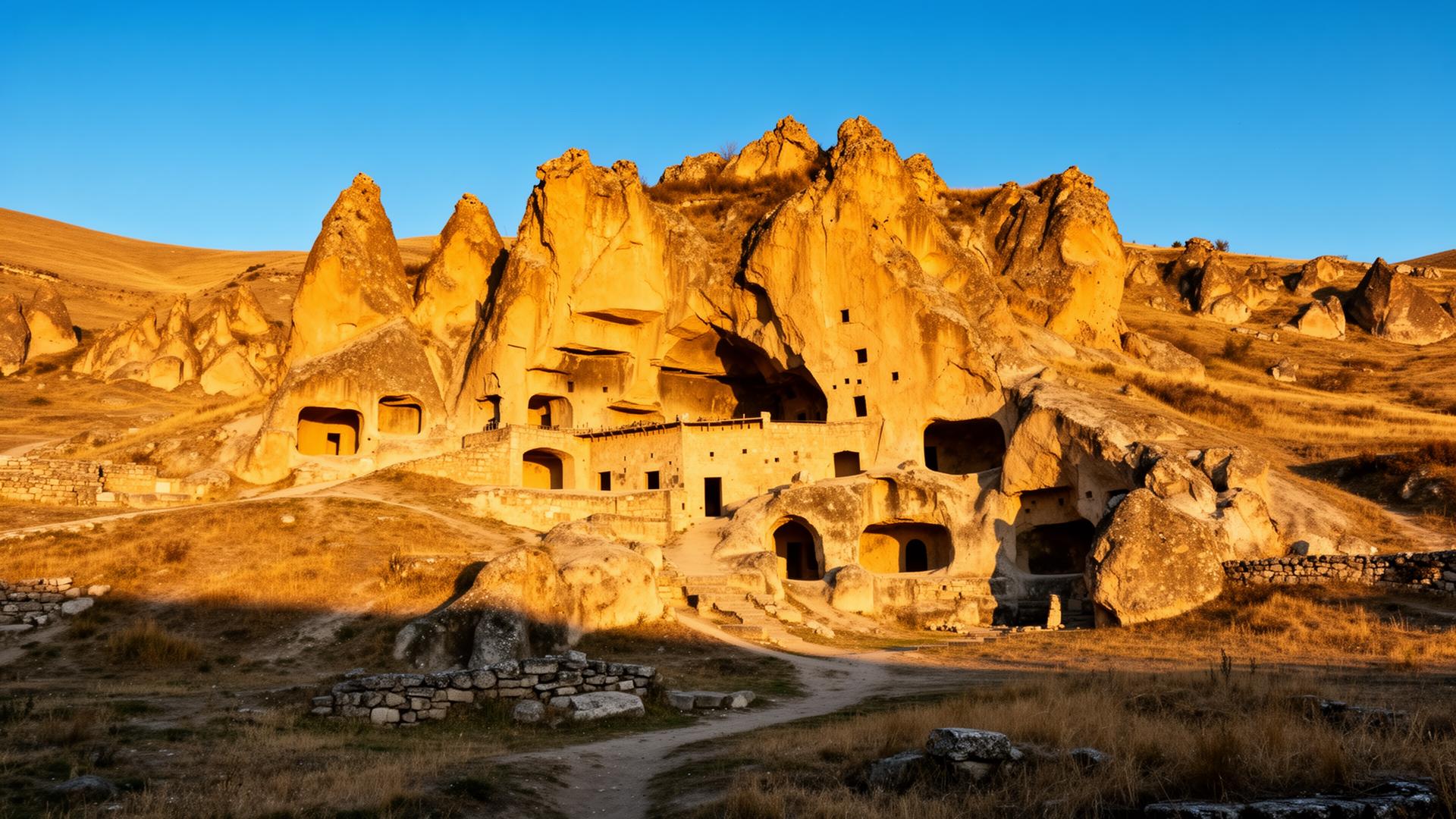
Ask most visitors about their Georgia itinerary and you will hear the same names: Tbilisi, Kazbegi, Kakheti wine country, Batumi. Rarely does anyone mention Kvemo Kartli, the region stretching south from the capital toward the Armenian border. That is a mistake.
Kvemo Kartli packs more history per square kilometre than almost anywhere else in Georgia. The oldest human remains ever found outside Africa. Some of the earliest evidence of winemaking on Earth. The world's oldest gold mine. Georgia's earliest churches. Its best-preserved German colonial villages. And the site of the most important battle in Georgian history. All within a 280-kilometre driving loop from Tbilisi.
On top of all that, this is one of the most culturally diverse corners of the country, home to Azerbaijani market towns, Armenian communities, and the architectural legacy of 19th-century Swabian German settlers.
Trip Overview
- Duration: 3 days, 2 nights
- Start/finish: Tbilisi
- Total distance: ~280 km
- Best season: Spring (April–May) for wildflowers and green hills
- Recommended car: Any sedan handles this route fine. A Hyundai Elantra is ideal for the paved roads throughout
Day 1: Azerbaijani Culture and German Architecture
The Road South from Tbilisi
Head south from Tbilisi toward Marneuli. About 45 minutes out, stop at the They Will Grow monument, a striking Soviet-era sculpture from 1975 showing a mother and two children gripping an oversized sword. The concrete has been carefully restored and the viewing platform offers a sweeping panorama of Kvemo Kartli's wide steppe.
If you continue south on this road, you will pass the Imiris Gora Archaeological Site, where excavations uncovered a Neolithic settlement dating to roughly 6,000 BC. This is where some of the earliest known evidence of grape cultivation and winemaking was found — linking this unassuming mound to Georgia's 8,000-year wine heritage. A modern protective museum structure has been built over the excavations.
Marneuli
Marneuli is the administrative centre of Kvemo Kartli and feels noticeably different from anywhere else in Georgia. About 80% of the municipality is ethnic Azerbaijani, and that is reflected in everything from the food to the architecture. Azerbaijani is widely spoken, lamb dominates restaurant menus, and mosques outnumber churches.
The large bazari market draws crowds from surrounding villages and is worth a wander for its produce stalls and bakeries. For a proper sit-down meal, Mugam Restaurant serves excellent Azerbaijani dishes: plov with apricots, qutab flatbreads, and grilled lamb.
Bolnisi: The Award-Winning Museum
Continue 40 minutes west to Bolnisi, your base for the next two nights. Stop first at the Bolnisi Museum, one of the best regional museums in Georgia. Reopened in a purpose-built facility in 2020 and nominated for the European Museum of the Year Awards, it covers local archaeology from the Neolithic through medieval periods, plus a fascinating section on the town's 19th-century German settlers. Give yourself 60–90 minutes.
German Heritage in Bolnisi
Bolnisi was founded in 1818 as Katharinenfeld by Swabian German families from Württemberg who were resettled under the Russian Empire. They built half-timbered Fachwerk houses with deep stone cellars for wine storage, laid out neat streets, and centred the town around a Lutheran church.
Today, Bolnisi preserves more of this architectural legacy than anywhere else in the country. The best examples of Fachwerk houses cluster in the southern part of town along Pharnavaz Mepe Street. The Georgian-German Wine House occupies a restored cellar-house from 1915 and traces the town's winemaking heritage. About two dozen small wineries still operate in Bolnisi, and in late spring they come together for the Bolnisi PDO Wine Festival.
Day 2: Ancient Churches and Prehistoric Dmanisi
Soviet Mosaics in Bolnisi
Start your morning with a walk through Bolnisi's surprisingly dense collection of Soviet-era public art. The entrance to Central Park features a long tiled wall filled with scenes of Georgian dancers and grape harvesting. Nearby, the former Bolnisi Cinema carries a striking 1984 mosaic depicting the 17th-century diplomat Sulkhan-Saba Orbeliani.
Bolnisi Sioni: Georgia's Oldest Church
A 15-minute drive southwest of town brings you to Bolnisi Sioni, widely considered the oldest surviving church in Georgia. Built in the late 5th century, this basilica predates most other Georgian churches by at least a century. The exterior stonework carries one of the earliest known examples of the Bolnisi cross, a distinctive ornamental motif that later became a national symbol and now appears on Georgia's coat of arms.
Dmanisi Archaeological Reserve
Thirty minutes south of Bolnisi, the Dmanisi Archaeological Reserve is the headline attraction of any Kvemo Kartli trip. This is where archaeologists discovered the oldest known human remains outside Africa — skulls and jaw fragments dating back 1.8 million years that rewrote our understanding of early human migration.
The site occupies a dramatic promontory above two converging river valleys. Below the medieval ruins of a castle, church, and bathhouse, the archaeological digs reveal layer upon layer of occupation stretching back to the earliest Pleistocene. In 2025, a human jawbone from the same period was unearthed at nearby Kvemo Orozmani, confirming the area's ongoing importance.
Contact the team in advance to confirm visiting hours. The Museum of Dmanisi Center of Culture and Art in town adds useful context.
Day 3: Canyons, German Beer Halls, and Sunset at Didgori
Samshvilde Canyon and Fortress
Leave Bolnisi by 9am for the 30-minute drive to Samshvilde Canyon. This is one of the best short hikes in southern Georgia: a gentle 30-minute walk along a canyon rim that ends at the ruins of one of the country's oldest fortified cities, first settled in the 3rd century BC.
At the tip of a narrow peninsula above the canyon sits Samshvilde Sioni, a sandstone basilica from the 8th century with inscriptions carved in both Georgian and Armenian. Park in the village and walk from there — the trail is easy to follow.
Lunch at Bahnhof Station in Asureti
Twenty minutes north, the village of Asureti (formerly Elisabethtal) is another former German colony. Head straight for Bahnhof Station, a German-style beer hall and garden set inside a restored railway station. Long wooden tables, decorative beer steins, outdoor seating, and a menu of proper schnitzel and pretzels make this the perfect road trip lunch stop.
After eating, walk around the village. The neat lanes and half-timbered houses feel more Baden-Württemberg than Caucasus. The Asureti Lutheran Church, built in 1871 and restored in 2017, anchors the centre of town.
The Didgori Valley and Battle Memorial
The drive northwest from Asureti into the Didgori Valley is one of the most beautiful stretches of road in Georgia. Smooth tarmac twists through undulating green hills, each turn revealing another sweep of pasture and sky.
These hills were the stage for the Battle of Didgori in 1121, when King David the Builder defeated a much larger Seljuk army in a victory that liberated Tbilisi and ushered in Georgia's Golden Age. The Didgori Battle Memorial is best visited at sunset, when the giant metal sword-crosses cast long shadows across the hills.
On the way, stop at Manglisi Sioni Cathedral, dating to the 4th century, with an unusual tetraconch plan and warm, aged stonework. From Didgori, the drive back to Tbilisi takes about an hour via Mtskheta, completing the loop.
Practical Tips
- Base: Stay two nights in Bolnisi. It is the most convenient location for all three days
- Roads: All main roads on this route are paved and in good condition. No 4x4 needed
- Fuel: Fill up in Marneuli or Bolnisi. Options thin out south of Bolnisi
- Season: Spring (April–May) is ideal, with poppy fields and green hills. Autumn is also beautiful
- Combine with: This trip pairs perfectly with a drive to Armenia — the Sadakhlo border crossing is just south of Marneuli
Why Kvemo Kartli Deserves Your Time
Most of Georgia's visitors never make it south of Tbilisi, which means this entire region remains wonderfully uncrowded. The combination of deep prehistory, multicultural heritage, German colonial architecture, dramatic canyons, and genuine local hospitality makes Kvemo Kartli one of the most rewarding road trips in the country.
We deliver cars free to Tbilisi Airport. No deposit, unlimited mileage, and prices from €40/day. For more road trip ideas, check our region-by-region guide to the best places in Georgia, our complete guide to driving in Georgia, or our season-by-season weather guide.