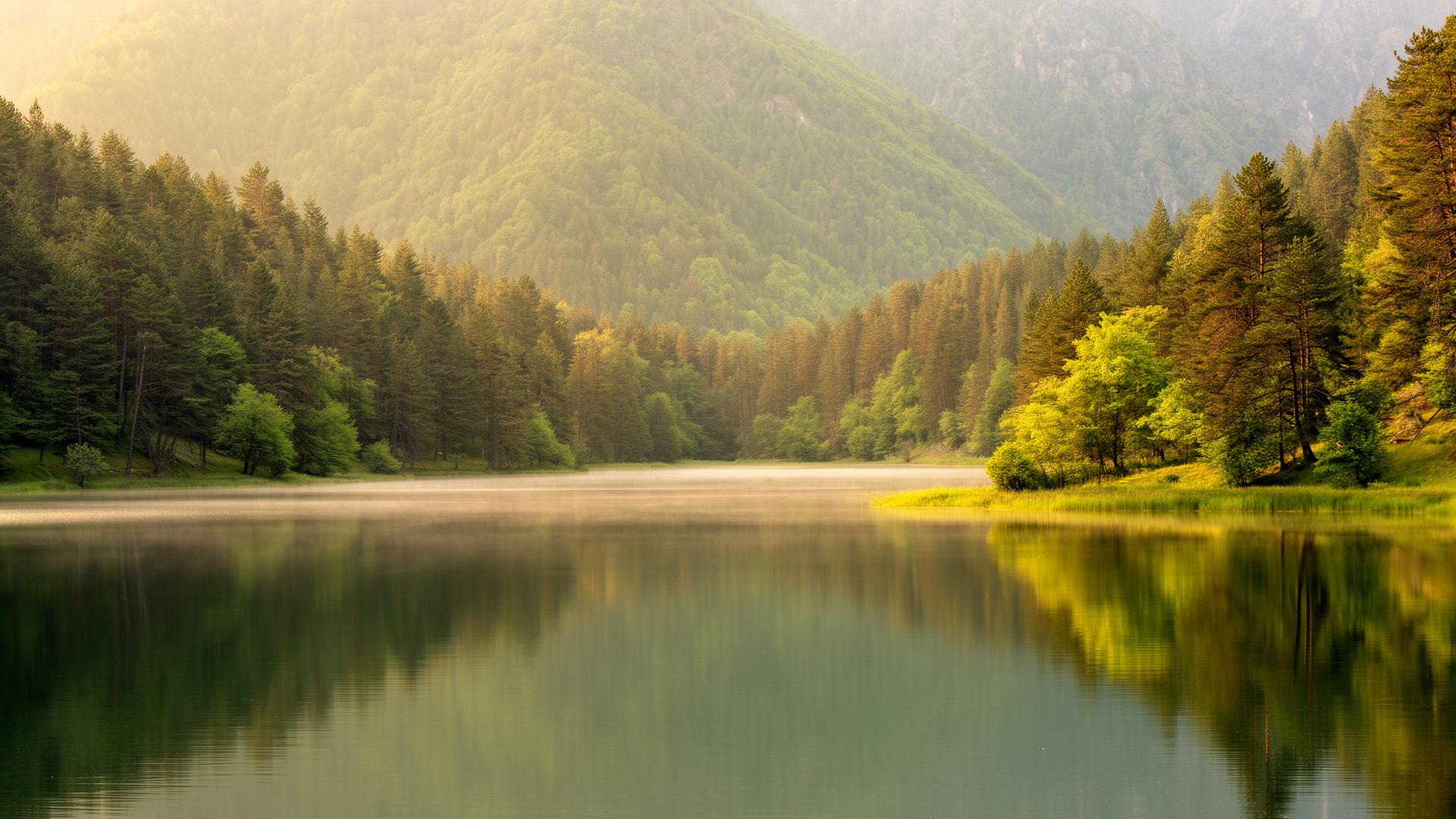
Mention Racha to a Georgian and watch their eyes light up. This highland pocket in western Georgia, wedged between Svaneti and South Ossetia, is the country's best-kept open secret. It is the only mountain region with an established wine culture, which tells you a lot about priorities around here. People come to cool off in the forests, eat extraordinarily well, and drink Khvanchkara by the glass.
For international visitors, Racha remains one of the least-documented regions in the country. That is partly what makes it so appealing. No tour buses, no Instagram queues, no overbooked guesthouses in July. Just quiet roads, generous hosts, and scenery that shifts from vineyard-lined valleys to alpine peaks within a single hour of driving.
Why Drive Racha?
Racha is spread out. The interesting parts are scattered across a 250 km stretch of mountain road, from the Nakerala Pass in the west to the highland villages near the Russian border in the east. Public transport connects a few towns, but to see the best of the region, you need your own wheels.
The good news is that the roads are mostly in decent shape. The main artery through Racha, the historic Ossetian Military Road, is fully asphalted through Lower Racha and most of Upper Racha. Only the final stretches to the most remote villages (Gona, Shovi) involve dirt or gravel, and even those are manageable in dry conditions with any vehicle that has reasonable clearance.
A 4-Day Racha Itinerary
Day 1: Over the Nakerala Pass to Ambrolauri
The drive into Racha from Kutaisi takes about 90 minutes and crosses the Nakerala Pass at 1,500 metres. On the way, stop at Shaori Reservoir, a 7 km artificial lake created in the 1950s and completely surrounded by pine and deciduous forest. In autumn, the whole shoreline erupts in crimson and gold.
Just before the pass, consider a detour to the Tskhrajvari viewpoint (the "Nine Crosses"). A steep 60 to 90 minute hike leads to a mountaintop chapel with panoramic views of the Greater Caucasus.
Continue down to Nikortsminda to visit the 11th-century cathedral, one of the finest examples of medieval Georgian stone carving in the country. The exterior relief work, depicting biblical scenes and mythological creatures, is remarkably well preserved.
End the day in Ambrolauri, the regional capital. A giant Khvanchkara wine bottle greets you at the roundabout. Spend the late afternoon driving through the Khvanchkara wine country at dusk, when the low sun lights up the vineyards and poplar-lined roads.
Day 2: Upper Racha Highland Villages
Follow the Rioni River east into mountainous Upper Racha. The scenery transforms: Caucasian fir forests close in around the road, the air cools, and the villages shrink to clusters of timber houses with carved balconies.
Ghebi (1,350 metres) has ruins of fortified Svan-style tower houses, a reminder of the region's historical ties to neighbouring Svaneti. The village is tiny and walkable in 30 minutes.
Beyond Ghebi, a rough track leads to Gona (1,660 metres), sometimes called Georgia's "Little Switzerland." A handful of cabins sit on hillsides against a backdrop of jagged peaks and summer pastures. The road requires high clearance (4x4 in wet conditions). If you prefer not to drive it, the hike from Ghebi is about 14 km return.
Overnight in Chiora, a charming village with excellent guesthouse options and mountain views from every balcony.
Day 3: Shovi and Oni
Start with a drive to Shovi, once a popular Soviet-era mountain resort at 1,600 metres. The setting is spectacular, with meadows, mineral springs, and thick forest. Note: a devastating landslide struck Shovi in August 2023, causing significant damage and casualties. The site has been partially cleared but remains sensitive. Approach respectfully.
Continue to Oni, the most strategically located town in Racha and the best single base if you want to minimize hotel changes. Oni has a surprising history: it was once home to a significant Jewish community, and the ornate 19th-century synagogue (currently under restoration) is one of the largest in the Caucasus.
The Oni History Museum is small but worthwhile, with archaeological finds from the Bronze Age and medieval manuscripts. Spend the afternoon wandering the quiet streets, admiring the traditional wooden houses and carved balconies that Racha is known for.
Day 4: Lechkhumi and the Return
If you are doing the full loop, head west through Lechkhumi. The road toward Lentekhi passes through the Sairme valley, where a moderate 3-hour hike reaches the Sairme Pillars, a set of dramatic limestone formations rising from the forest floor.
From Lentekhi, you can either return to Kutaisi (2 hours on sealed road) or continue north to Svaneti via the Zagari Pass to connect with our Svaneti road trip.
When to Visit Racha
- Late June to August: Peak season. Best for hiking and lake time. Mountain villages are fully open.
- September: Quieter as families head home. Still warm, excellent light for photography.
- October to early November: Autumn colours peak. The Rtveli wine harvest happens here later than in Kakheti, usually late October into November. Prime time.
- Winter: Upper Racha villages are snowbound and inaccessible. Lower Racha remains reachable but many restaurants and cafes close.
For a broader seasonal overview, see our when to visit Georgia guide.
What to Eat and Drink
Racha has its own distinct food culture that sets it apart from the rest of Georgia:
- Lobiani: Bean-filled bread, the Rachan equivalent of khachapuri. Every guesthouse has their own recipe.
- Shkmeruli: Chicken in a garlic and milk sauce, named after the village of Shkmeri near Shaori Lake. This dish has gone global but tastes different at its point of origin.
- Lori ham: Air-dried pork specific to Racha, rich and slightly smoky.
- Khvanchkara: The region's signature semi-sweet red wine, made from Alexandrouli and Mujuretuli grapes. A blend that earned a gold medal at the 1907 International Exhibition in Belgium.
Practical Tips
- Fuel up in Ambrolauri or Oni. There are no reliable stations in Upper Racha.
- Mobile signal is patchy outside the main towns. Download offline maps.
- Many restaurants and cafes in smaller villages are seasonal, closing by November.
- Landslides can block roads after heavy rain. Check the GeoRoad Facebook page for updates before setting out.
- Book guesthouse dinners in advance. Options are limited in the highland villages.
Renting a Car for Racha
A standard sedan handles the main roads through Lower Racha and Oni comfortably. For Upper Racha (Ghebi, Gona, Shovi), an SUV or 4x4 from Kutaisi is recommended, especially if the ground is wet.
We deliver free to Kutaisi Airport and anywhere in Kutaisi. No deposit, unlimited mileage, and prices from €40/day. Racha pairs perfectly with a visit to Tskaltubo's sanatoriums or a continuation into Svaneti via Lentekhi.
For more off-the-beaten-path ideas, read our hidden gems guide.