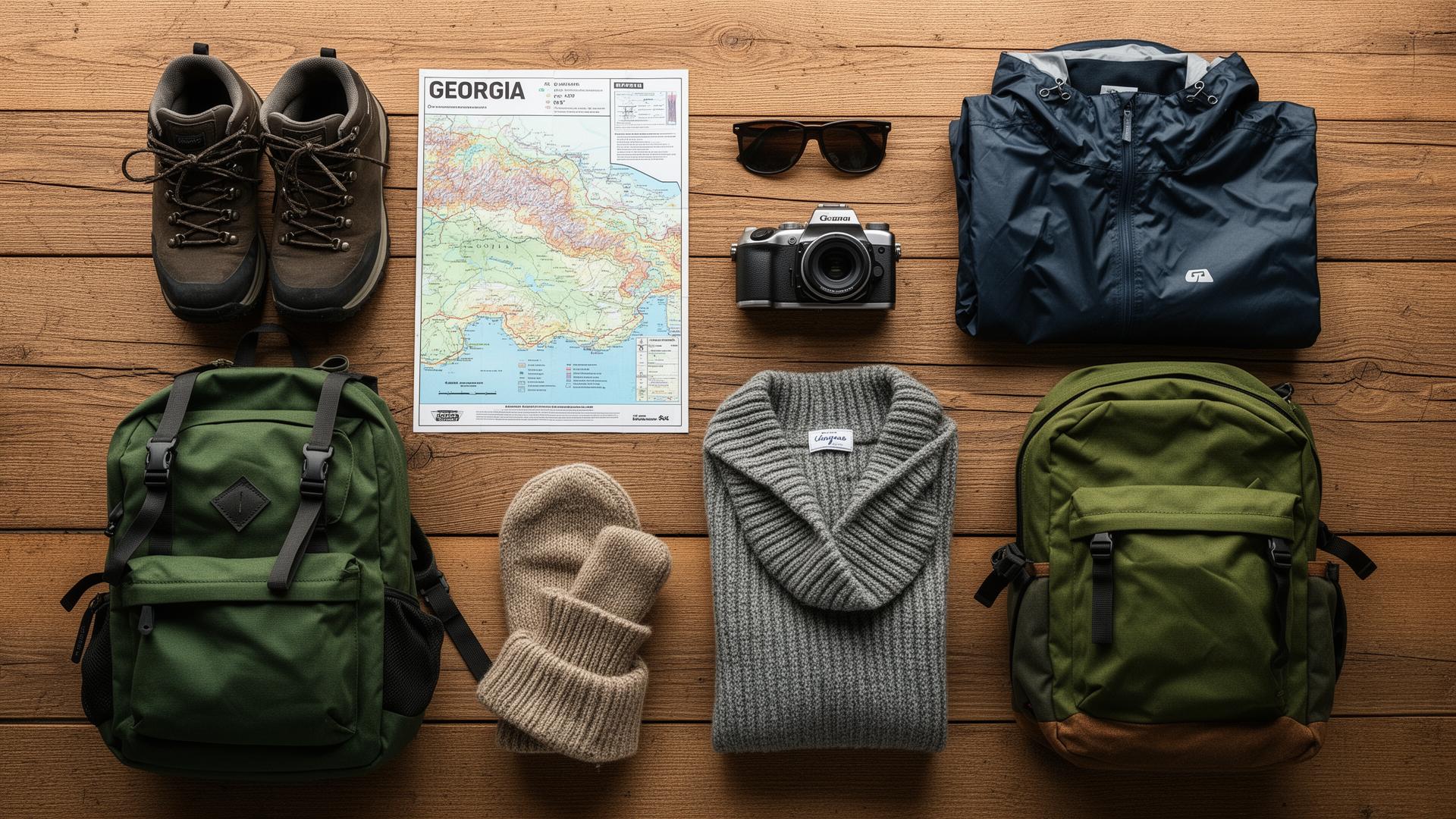
Every week we meet someone at Tbilisi Airport wearing flip-flops and a tank top, about to drive into mountains where it snows in June. Georgia's climate is wildly variable across short distances, and packing for it requires more thought than most European destinations. Here is what actually matters.
The One Rule That Covers Everything
Georgia spans subtropical coastline, alpine passes above 3,000 meters, dry steppe, and humid river valleys. You can experience four seasons in a single day of driving. The answer is always layers. Not one warm jacket, not one light outfit. Layers you can add and strip depending on elevation and weather.
Luggage Strategy
Travel light. If you are renting a car, trunk space is generous and luggage is not an issue. But if you are mixing car travel with marshrutka vans or trains at any point, a compact bag makes life dramatically easier. Minivans have minimal luggage room and drivers are not gentle.
- Road trippers: Any luggage works. Our SUVs and sedans have full trunk space
- Mixed transport: A 40 to 50 liter backpack or a compact rolling carry-on
- Day pack: Essential. You need something for daily use that fits water, a rain layer, sunscreen, and a scarf. A foldable daypack weighs nothing and saves you constantly
Clothing: Summer (June to September)
Tbilisi hits 38 to 40°C in July and August. The coast around Batumi is humid and hot. But mountain passes and high valleys drop to 10 to 15°C even in midsummer, and Tusheti can see frost overnight in any month.
- Light, quick-dry tops. Cotton dries slowly and Georgia has almost no laundromats. Synthetic or merino blends are better
- One pair of long pants. Required for churches (both genders) and more comfortable for evening temperatures in mountain villages
- Shorts or a light skirt. Fine in cities and at the coast
- A light fleece or sweater. For mountain evenings, air-conditioned restaurants, and early mornings on the road
- Swimwear. For the Black Sea coast, Tbilisi's sulfur baths, and the many river swimming spots you will discover while driving across the country
- Comfortable walking shoes. Tbilisi's Old Town is cobblestoned and hilly. Sandals with ankle support or proper walking shoes beat fashion sneakers
Clothing: Winter (November to March)
Tbilisi winters are mild but raw: 0 to 8°C with a damp wind that cuts through thin layers. Gudauri and the mountain roads are properly cold with snow and ice from November onward.
- Thermal base layers. Worn under everything else. Merino wool is ideal
- Insulated jacket. A packable synthetic or down jacket handles city cold and car-to-destination transitions in the mountains
- Waterproof outer shell. Rain in Tbilisi, snow in the mountains. A proper rain jacket is non-negotiable
- Waterproof boots with grip. Tbilisi sidewalks ice over, mountain roads get muddy, and many guesthouses require outdoor walking between buildings
- Warm sleeping clothes. Most Georgian homes lack central heating. Gas heaters warm one room. Bring warm clothes for sleeping, especially in guesthouses
- Wool hat, gloves, scarf. The wind in Tbilisi funnels through the river valley and is bitterly cold from December through February
Clothing: Spring and Autumn
Spring (April to May) and autumn (September to October) are the most unpredictable. Pack for both warm and cold:
- Everything from the summer list plus a proper rain jacket
- A warmer mid-layer (fleece or light down)
- Closed-toe waterproof shoes. Spring rain is frequent and autumn trails are muddy
- Mountain roads may still have snow or ice through May. If you are driving to Svaneti or Racha in spring, bring cold-weather gear regardless of what the forecast says in Tbilisi
The Church Dress Code
Georgia has hundreds of churches and monasteries, and most visitors enter several. The dress rules are consistent and enforced, especially at rural and monastery sites:
- Women: Shoulders covered, knees covered, hair covered inside the church. A lightweight scarf handles both hair and shoulders
- Men: Shoulders covered, knees covered. Long pants required at stricter sites
- Most major tourist churches provide free wrap-around skirts and headscarves at the entrance. Smaller or rural churches do not. Carrying your own scarf avoids the problem entirely
- Some monasteries will refuse entry to men in shorts even with a wrap. Long pants are the safe choice for anyone planning monastery visits
This matters because church visits are not optional sightseeing. Gergeti Trinity above Kazbegi, Alaverdi Cathedral in Kakheti, Gelati near Kutaisi, and Vardzia in Samtskhe-Javakheti are among the most spectacular sites in the country.
Gear for Mountain Driving
If you are driving in Georgia, especially on mountain roads, keep these in the car:
- Sunglasses. Mountain glare is intense, and many passes face directly into sunrise or sunset
- Refillable water bottle. Tap water is safe in Tbilisi and most mountain areas have clean spring water. Fill up at every opportunity
- Snacks. Remote stretches between towns can be long. Village shops exist but stock is unpredictable
- Offline maps. Download Google Maps for all of Georgia before heading into the mountains. Cell coverage drops in valleys and passes
- Phone mount. For navigation. We can recommend one when you pick up your car
- Cash. Card payment works everywhere in Tbilisi but many mountain villages, roadside restaurants, and fuel stations on secondary roads are cash-only. Carry at least 100 to 200 GEL in small bills when heading out of the city
Hiking Gear
Georgia's trekking scene ranges from gentle wine country walks to serious multi-day alpine routes. What you need depends on where you are going:
- Day hikes (Kazbegi, Tbilisi trails, Martvili): Good walking shoes, daypack, water, rain layer. No special equipment needed
- Serious treks (Mestia to Ushguli, Tusheti trails): Proper hiking boots with ankle support, waterproof pack cover, fleece, trekking poles. Rental gear is available from Camp Share in Tbilisi but quality varies
- All hikes: Start early. Afternoon thunderstorms are common in summer mountains
Electronics and Practical Items
- Power adapter: Georgia uses Type C/F sockets (standard European). 220V, 50Hz. If coming from outside Europe, bring a universal adapter
- Portable battery pack: Essential for long driving days when your phone is running navigation. A 10,000 mAh pack covers a full day
- Headphones: For marshrutka rides and long drives. Noise-cancelling helps
- Travel corkscrew: You are visiting the birthplace of wine. You will buy bottles. Hotel rooms rarely have openers
- Wine bottle protectors: Inflatable sleeves for packing bottles in checked luggage on the way home
- Dry bag or wet bag: For swimwear after sulfur baths, wet hiking clothes, or separating dirty laundry
Toiletries Worth Mentioning
- Sunscreen: The altitude intensifies UV. SPF 50 for any mountain driving or hiking
- Insect repellent: Mosquitoes are aggressive in Tbilisi and Kakheti from June through September
- Moisturizer: Tbilisi is dry. Winter visitors and anyone spending time in heated cars will notice cracked skin within days
- Prescription medication: Keep it in original packaging. Georgian immigration can question loose pills. A doctor's letter helps
What You Can Buy in Georgia
Do not overpack. Tbilisi has everything:
- Pharmacies (Pharmadepot, GPC) on every other block with surprisingly good stock
- Outdoor gear at Decathlon (Tbilisi Mall) and local shops
- Clothing at Zara, H&M, and local boutiques along Rustaveli Avenue
- Second-hand shops with quality winter layers at fraction of new prices
- Supermarkets (Carrefour, Nikora, Smart) with full toiletry selections
The exception: specialty hiking gear and quality rain jackets are expensive and limited. Bring these from home.
The Five Things People Forget
- A scarf. For churches, for sun protection, for cold evenings. The single most versatile item you can pack
- Cash in small bills. ATMs exist but rural Georgia runs on cash
- Rain gear. Georgia gets sudden downpours year-round, even when the forecast says clear
- Warm layers for summer mountain travel. The temperature drops 6°C per 1,000 meters of elevation gain
- A reusable water bottle. The spring water across Georgia is exceptional and free
For more trip planning, see our first-time visitor guide, seasonal planning guide, budget breakdown, and neighborhood guide. Browse our full fleet and start planning your Georgia road trip.