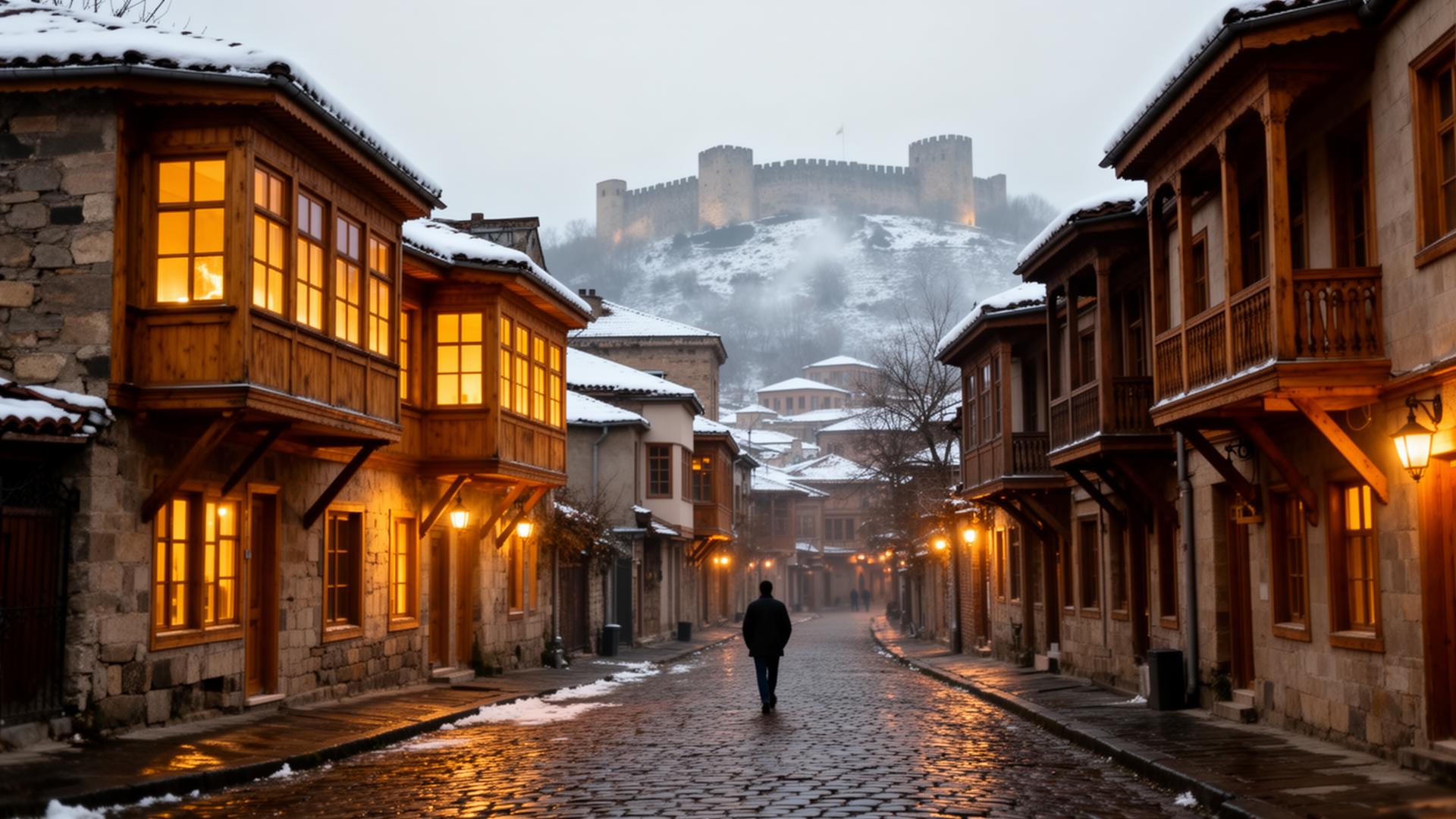
Winter in Tbilisi is not what most people expect. The city does not freeze solid or disappear under snow. Instead, it settles into a quiet, atmospheric version of itself: streets emptier than in summer, café windows fogged from the inside, the smell of wood smoke and roasting chestnuts drifting through Sololaki's alleyways. Temperatures hover between 2–10°C for most of the season, snow is rare in the city centre, and the dryness of the air makes even January feel milder than a damp Western European winter at the same temperature.
What makes Tbilisi genuinely special in winter is context. This is a city built on sulfur hot springs. The entire bath district of Abanotubani exists because thermal water rises naturally from the ground — and soaking in it on a frosty evening is one of those experiences that defines a trip. Add a food culture designed around hearty mountain dishes, a growing café and wine bar scene, and some of the most interesting museum interiors in the Caucasus, and you have a winter city break that competes with destinations ten times more expensive.
December: Lingering Autumn and Rising Festivity
December in Tbilisi feels like an extended autumn that gradually accepts winter's arrival. Daytime temperatures average 8–10°C, and the last golden leaves often cling to the plane trees along Rustaveli Avenue well into the first week. Rain is rare — December and January are the driest months of the year in the capital.
From mid-December, the city transforms. Christmas illuminations appear on Rustaveli Avenue, Freedom Square, and Aghmashenebeli Avenue. The Presidential Palace displays traditional chichilaki (Georgian Christmas trees made from curled hazelnut shavings) alongside EU and Georgian flags. Shopping malls install elaborate decorations, and the general mood shifts toward celebration. Traffic, unfortunately, becomes genuinely terrible — avoid driving in central Tbilisi during the last two weeks of December if possible.
Key dates: New Year's Eve (December 31) is the biggest celebration of the year in Georgia — far more important culturally than Christmas. The city erupts with fireworks at midnight.
January: The Quiet Core of Winter
January is technically the coldest month, with daytime temperatures around 5–7°C and nights dropping below freezing. But the cold is dry and manageable with proper layers. The city empties after New Year's celebrations, and many small businesses close for the first week or two of January — making it one of the quietest periods to explore Tbilisi's streets and museums without crowds.
Orthodox Christmas falls on January 7. The celebration is more solemn than the Western version: families attend midnight liturgy at churches across the city, followed by a feast that centres on satsivi (cold chicken in walnut sauce) and gozinaki (fried dough with honey and walnuts). The atmosphere in the Old Town around Sioni Cathedral on Christmas Eve is genuinely moving.
Epiphany on January 19 brings one of Georgia's most dramatic rituals: priests and believers plunge into freezing rivers and lakes as an act of purification. The most accessible ceremony near Tbilisi takes place at various city churches and at the reservoir north of the city.
February and March: The Long Tail
February mirrors December's temperatures (8–10°C) but carries a different weight. The novelty of winter has worn off, air quality in the valley can deteriorate due to trapped vehicle emissions, and the city feels like it is waiting for spring. It is Tbilisi's least popular month for tourism, which also means the lowest hotel prices and shortest queues at every attraction.
March is famously unpredictable — locals call it "moody March." It can deliver sleet, sunshine, wind, and even a late snow dump in the same week. True spring does not arrive until April, so treat March as a continuation of winter for planning purposes.
For a broader country-wide perspective on winter travel, see our complete winter guide.
The Sulfur Baths: Winter's Main Event
The Abanotubani bath district is the reason Tbilisi exists — King Vakhtang Gorgasali allegedly founded the city after discovering the hot springs while hunting with a falcon in the 5th century. The sulfur-rich water rises at 38–40°C year-round, and the experience of sinking into a mineral pool while cold air swirls above the surface is transformative in a way that summer bathing simply cannot replicate.
The bathhouses range from ornate private rooms with tiled domes (ideal for couples or small groups) to communal halls that feel like stepping into a 19th-century painting. A traditional kisi scrub — an aggressive but deeply satisfying exfoliation with a rough cloth — removes layers of dry winter skin and leaves you radiating warmth for hours afterward.
The best winter routine: walk to the Tabori viewpoint above the Old Town for sunset, descend to the baths for an evening soak, then emerge pink-skinned and ravenous for dinner at a nearby restaurant.
Indoor Escapes: Museums, Cellars, and Hidden Interiors
Winter strips the leaves from the trees and reveals Tbilisi's architecture in sharp detail. It also drives you indoors more often — which, in this city, is no hardship.
Museums Worth the Ticket
The Georgian National Museum on Rustaveli Avenue anchors any cultural itinerary: the Soviet Occupation Hall is sobering, the archaeological collection is world-class, and the treasury holds Colchian gold artefacts that predate the Roman Empire. The Art Palace of Georgia in Chugureti houses an eclectic collection of theatre memorabilia, musical instruments, and paintings in a gorgeous building.
For something quieter, the Museum of Books — the largest literary collection in the Caucasus — occupies a building with ornate ceiling frescoes and a carved staircase that rivals the exhibits. The Wine Museum, built into subterranean chambers beneath the Old Town, offers a cool two-hour education in 8,000 years of Georgian viticulture.
The Mirror Halls and Painted Entryways
The State Academy of Arts contains Qajar-style mirror halls crafted by Persian artisans — rooms where thousands of tiny glass fragments catch and multiply winter's weak light. The effect was deliberately designed for the building's original winter quarters, making January and February the most appropriate time to visit.
Throughout Sololaki, Chugureti, and old Avlabari, the entryways of 19th-century merchant houses hide elaborate frescoes, spiralling staircases, and tiled floors. Winter's quiet streets and lack of crowds make it easy to slip through unlocked doors and explore these semi-public spaces without feeling intrusive. See our neighbourhoods guide for orientation.
Comfort Food and Wine Bars
Georgian cuisine was engineered for cold weather. The country's mountainous terrain produced a food culture built around warmth, fat, and fermentation. Winter in Tbilisi is the right context for these dishes in a way that August never is.
What to eat: Chikhirtma (a lemony chicken broth thickened with egg that functions as Georgia's chicken soup), lobio (slow-cooked beans served in a clay pot with cornbread), khachapuri in all its regional variations, and ostri (a rich, spiced beef stew). Holiday meals add satsivi and gozinaki to the rotation.
Where to drink: The city's wine bars have multiplied in recent years, and winter evenings are their natural habitat. Brick-vaulted cellars across the Old Town serve amber and red wines by the glass, often accompanied by cheese and walnut platters. A glass of Saperavi from a clay qvevri, sipped in a basement bar while rain taps the street above, is one of Tbilisi's defining winter moments.
For specific recommendations, see our restaurant guide.
Soviet Architecture in Winter Light
Bare trees and overcast skies are the ideal backdrop for photographing Tbilisi's Soviet-era architecture. The city has an extraordinary collection: the Jenga-like Ministry of Highways building, the Tbilisi Skybridge (an experimental 1960s housing complex with an elevated walkway connecting tower blocks), the Chronicles of Georgia monument on a windswept hill above the Tbilisi Sea, and dozens of socialist realist mosaics scattered across residential blocks.
Winter light — flat, diffused, and shadowless — reveals the texture of raw concrete and the faded colours of tile mosaics in ways that harsh summer sun washes out. The microcinema scene also thrives in winter: independent venues screen Georgian and Soviet-Georgian films alongside international cult classics, often in atmospherically crumbling spaces.
Day Trips and Ski Access
Winter narrows the range of accessible day trips but does not eliminate them. The following routes are all manageable from Tbilisi:
- Gudauri (2 hours): Georgia's most developed ski resort, reached via the Georgian Military Highway. The road is well-maintained but requires winter tyres. Season runs late December through late March.
- Mtskheta (30 minutes): Georgia's ancient capital is atmospheric in winter — fewer tourists, and the UNESCO-listed Svetitskhoveli Cathedral feels properly contemplative in the cold.
- Sabaduri Forest (40 minutes): When snow falls, this forest north of Tbilisi turns into a winter wonderland. Accessible by any car with winter tyres.
- Kakheti wine region (90 minutes): The vineyards are dormant and the landscape is stark and beautiful. Cellars and tasting rooms are open year-round, and you will have them largely to yourself.
For ski-focused itineraries, a 4x4 with winter tyres is the safest choice. The Toyota 4Runner and Jeep Wrangler handle mountain roads confidently. For city-based winter trips, any car in our fleet works fine. Free delivery to Tbilisi Airport, Kutaisi Airport, or Batumi Airport.
What to Pack for Winter in Tbilisi
- Layers: A thermal base layer, a mid-layer fleece or wool jumper, and a windproof outer jacket. Tbilisi's valley location means wind chill is a real factor on clear days.
- Footwear: Waterproof boots with good grip. Tbilisi's cobblestones get slippery when wet, and some pavements are uneven.
- Accessories: Scarf, gloves, and a warm hat for evenings and any hilltop walks. Sunglasses for bright winter days.
- Moisturiser: The air is dry. Cracked skin sets in within a couple of days without regular application.
- Modest clothing: Churches require covered shoulders and knees year-round. In winter, this is usually satisfied by default.
For a complete checklist, see our packing guide.
Frequently Asked Questions
How cold is Tbilisi in winter?
Daytime temperatures average 5–10°C from December through February, with nights dropping to 0°C or slightly below. The cold is dry rather than damp, making it feel milder than equivalent temperatures in Western Europe. Snow in the city is rare — usually 2–3 light days per winter.
Is Tbilisi worth visiting in winter?
Absolutely. The sulfur baths, museum interiors, wine cellars, and comfort food are at their best in cold weather. Hotel prices drop significantly, crowds disappear, and the city's architecture is revealed by bare trees. It is also the gateway to Georgia's ski resorts.
Does it snow in Tbilisi?
Rarely. Expect 2–3 light snow days per winter, usually in late February or early March. Snow rarely sticks for more than 24 hours in the city centre. For guaranteed snow, drive to Gudauri (2 hours) or any mountain destination above 1,500 metres.
When is Orthodox Christmas in Georgia?
January 7. The celebration is more religious than commercial: families attend midnight liturgy and share a traditional feast. New Year's Eve (December 31) is the bigger secular celebration with fireworks and street festivities.
Can I drive to Gudauri in winter?
Yes, the Georgian Military Highway to Gudauri is maintained year-round. Winter tyres are mandatory from December 1 to March 1. A 4WD is recommended but not strictly required on the main highway. Check for avalanche closures on the Kazbegi stretch beyond Gudauri before departing.