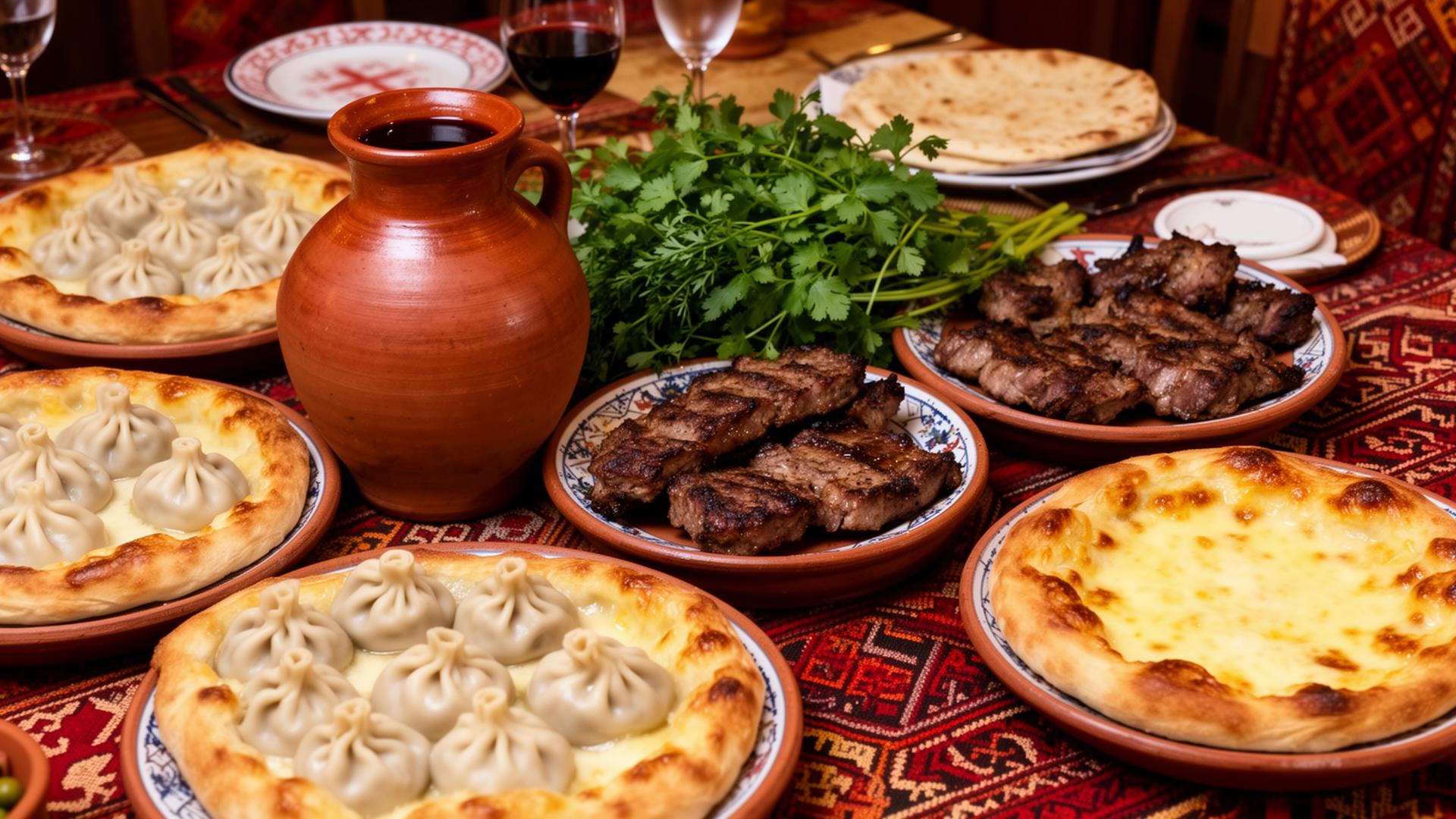
Georgian food is one of the main reasons people visit this country. Tbilisi has hundreds of restaurants ranging from 5-lari khinkali joints to polished wine-pairing tasting menus. The food is extraordinary. But the dining culture has quirks that confuse visitors if nobody explains them in advance. Here is the practical guide.
When Georgians Actually Eat
Meal times in Tbilisi run later than most of Europe. Lunch lands between 2pm and 3pm. Dinner starts around 8pm and can stretch past midnight. This is partly because Georgian office hours skew late: many people start work at 10 or 11am and finish at 7 or 8pm.
Most restaurants open around 11am or noon and stay open continuously through to 11pm or midnight. There is no afternoon closing. A handful of places run 24 hours.
Breakfast is the weak spot. Georgia does not have a strong breakfast-out culture. Most locals eat at home or skip it entirely. Specialty coffee shops and a growing number of brunch spots open by 9 or 10am, but do not expect every restaurant to serve breakfast. If your hotel does not include it, plan ahead.
How Ordering Works
Table service is standard everywhere. Walk in, sit down, and a waiter will bring the menu. Most restaurants have menus in Georgian, Russian, and English. Photo menus are common at tourist-facing places.
Georgian menus are enormous, often running 10 or more pages. They typically start with salads and cold starters, then soups, then mains and sides, with a brief dessert section at the end. Do not be surprised when the waiter tells you certain items are unavailable. This is normal, not a red flag.
Daily specials and prix-fixe lunches are rare outside high-end restaurants. You order from the full menu at any time of day.
Reservations: Almost never necessary. Walk-ins work at 99% of restaurants. The exceptions are fine-dining spots and restaurants with entertainment shows, which can book out weeks ahead. If you want to reserve, message the restaurant through their Facebook page.
The Sharing Table
Georgian dining is communal by default. Almost every dish is designed to be shared, placed in the center of the table for everyone to pick from. Your waiter will assume you are sharing unless you say otherwise.
Order a mix of cold starters (eggplant rolls, bean salad, fresh herb plates), one or two hot dishes, and bread. Cold items arrive first, sometimes 15 to 20 minutes before anything hot. This is intentional, not slow service. It gives you something to eat while the kitchen works on the cooked dishes.
If you order soup, the waiter may ask whether you want it split into individual bowls. Say yes unless you have strong feelings about sharing soup.
Why Your Food Takes 40 Minutes
Georgian kitchens cook to order. Khinkali dumplings are hand-folded after you order them. Khachapuri dough is stretched fresh. Mtsvadi (grilled meat skewers) go over coals when you request them. This means wait times of 20 to 40 minutes for hot dishes are completely normal.
If everything arrives in five minutes, it was probably sitting under a heat lamp, and you should be concerned, not impressed. The wait is a quality indicator.
Dishes from the same order do not always arrive together. Your khachapuri might land 10 minutes before your companion's chicken. This is standard, not rude. Start eating.
The Khinkali Protocol
Khinkali (soup dumplings) are Georgia's most iconic dish and come with their own set of rules:
- Minimum order: Every restaurant requires a minimum of 3 to 5 pieces per filling type. You cannot order one dumpling
- Quantity: If ordering other food alongside, 3 to 5 khinkali per person is plenty. As a standalone meal, 6 to 10 is standard
- How to eat them: Let them cool slightly. Grab the top knot with your fingers (or spear it with a fork). Take a small bite from the side and suck out the hot broth first. Then eat the rest of the dumpling. Leave the doughy top knot on your plate
- The knot: The twisted top is not meant to be eaten. It is a handle. Leaving the knots on your plate is correct etiquette. Some people count them to track how many they have eaten
- Traditional pairing: Khinkali is traditionally eaten with beer, not wine. Black pepper is the only acceptable condiment. No soy sauce, no ketchup
Bread, Wine, and the Extras
Bread
Georgian bread (puri) accompanies nearly every meal. Some restaurants include it free, others charge 1 to 2 GEL. It arrives automatically unless you specifically decline. Shotis puri (the elongated teardrop shape baked in a clay oven) is the most common variety and is genuinely excellent.
Wine
Georgia is the birthplace of wine, with 8,000 years of winemaking history. Every restaurant serves wine by the glass, bottle, or decanter (roughly 6 glasses). Draught house wine (both red and white) is available at most places and is significantly cheaper than bottled options.
If you are exploring Georgian wine seriously, visit Kakheti by car. The wine region is 90 minutes east of Tbilisi and best experienced with a rental car so you can stop at cellars along the way.
Dessert
Georgia does not have a strong dessert culture. Most restaurant dessert menus are short: fresh fruit, dried fruit, baklava, and maybe pelamushi (a grape-must pudding). Churchkhela (the candle-shaped walnut-and-grape candy sold at every market) is the national sweet, but it is not a restaurant item. Buy it from street vendors or the Dezerter Bazaar.
The Bill: Taxes, Service Charges, and Tipping
This is where tourists get caught off guard. Two charges may be added to your bill beyond the menu prices:
- VAT (18%): Sometimes included in menu prices, sometimes added on top. Check the fine print at the bottom of the menu
- Service charge (10 to 20%): Added by some restaurants, especially higher-end ones. Again, check the menu footer. Not all places do this
Tipping: Not mandatory but appreciated. 10 to 15% is standard for good service. Even if a service charge appears on the bill, that money rarely reaches the wait staff. Leave an additional tip directly with your waiter if the service was good. Cafes with counter service usually have a tip jar.
Payment: About 95% of Tbilisi restaurants accept cards. The waiter brings a portable terminal to your table. Outside the capital, cash becomes more important. See our budget guide for more on costs.
Vegetarian, Vegan, and Dietary Needs
Georgian cuisine is surprisingly vegetarian-friendly. Many traditional dishes are naturally meat-free: lobio (bean stew), badrijani (eggplant rolls with walnut paste), pkhali (vegetable-walnut pâtés), ajapsandali (vegetable stew), and multiple varieties of cheese-filled khachapuri.
Most restaurants also offer a "fasting menu" (samargvelo), which is entirely plant-based. This tradition comes from Georgian Orthodox fasting periods when no animal products are consumed. It is essentially a vegan menu that exists year-round.
Gluten-free dining is harder. Bread, dough, and wheat-based dishes are central to Georgian cuisine. Some corn-based items like chvishtari (cornbread) and mchadi use cornstarch, but cross-contamination is common. Ask your waiter directly and be specific about severity.
Unwritten Rules
- Plate swapping: Waiters may replace your plate mid-meal with a clean one. This is a Georgian hospitality custom, not a mistake. Accept it gracefully
- Hand washing: Many restaurants have a basin outside the restrooms specifically for washing hands before eating. Use it
- Over-ordering is cultural. Georgians routinely order more food than they can finish. Leaving food on the table is not considered rude in restaurants. At someone's home, eat as much as you can to honor the host
- Indoor smoking: Banned since 2019 and generally enforced. Most restaurants comply
- Change rounding: If your bill is an odd amount, do not be surprised if small coins are left out of your change
Where to Eat by Neighborhood
Your neighborhood determines your restaurant options more than you might expect:
- Kala (Old Town): Overpriced and tourist-oriented. Beautiful setting, mediocre food-to-price ratio
- Sololaki: Excellent wine bars and modern Georgian restaurants at reasonable prices
- Chugureti (Marjanishvili): The best food neighborhood. Highest density of quality restaurants at every price point. Skip the pedestrianized stretch of Aghmashenebeli, go one block in any direction
- Vera: Wine bars, specialty coffee, contemporary dining. Pricier but worth it
- Vake: Strong cafe and breakfast scene. Good international options
Eating on the Road
If you are driving across Georgia, roadside restaurants (called "sachmeli" or just marked with hand-painted signs) serve some of the best food in the country. They are often family-run, cook everything fresh, and charge a fraction of Tbilisi prices. Mtsvadi grilled over grapevine coals at a highway stop in Kakheti or a plate of lobio in Racha can be a trip highlight.
Pack snacks for remote stretches. Village shops exist but stock is limited. Carry water. And budget for eating well: food is one of the cheapest and best parts of traveling in Georgia.
For more trip planning, see our first-time visitor guide, packing list, and seasonal guide. Browse our full fleet for your Georgia road trip.