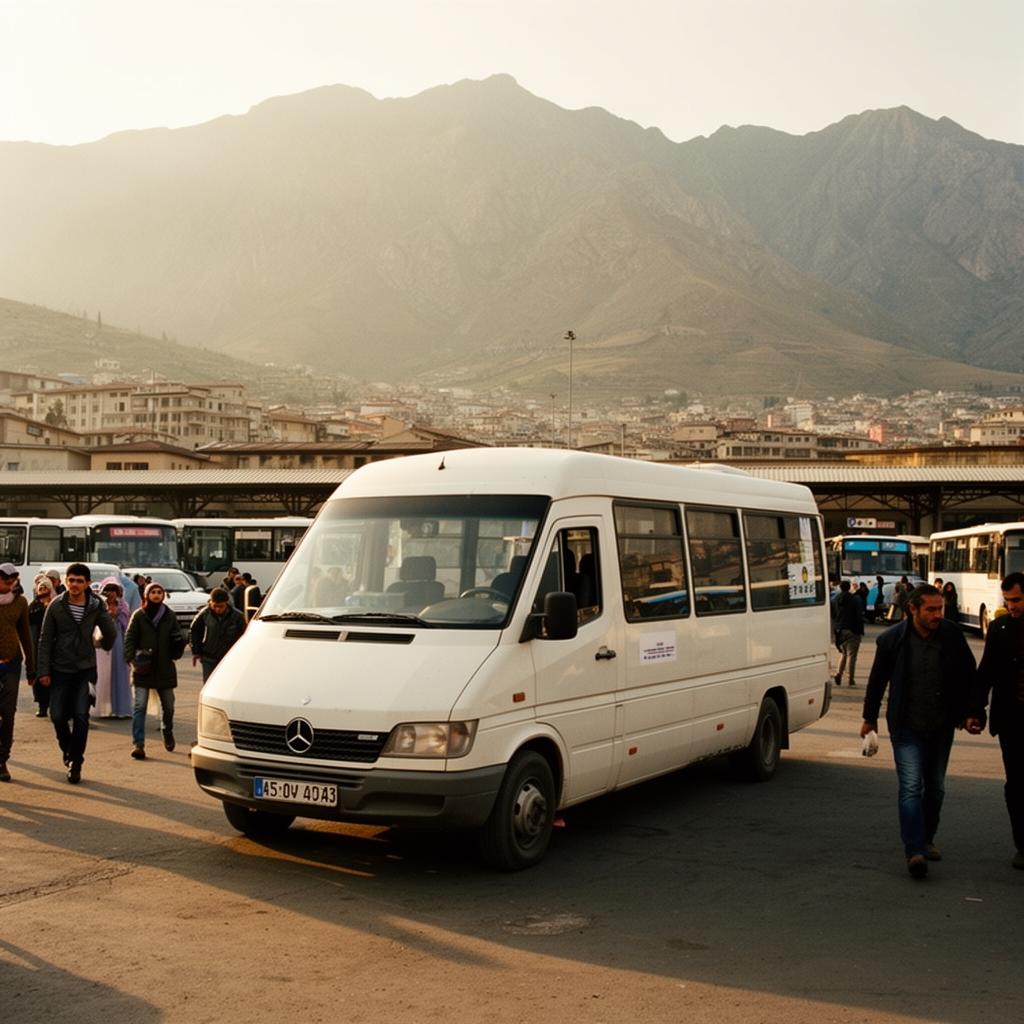
If you spend more than a day or two in Georgia without a rental car, you will almost certainly ride a marshrutka. These white minivans are the backbone of intercity transport, connecting big cities, small towns, and mountain villages across the country. They are cheap, frequent on popular routes, and they go places no train or coach can reach.
They are also cramped, unpredictable, and driven by people who treat speed limits as loose suggestions. This guide covers how the system actually works, what to expect on board, every major station and route, and when it makes more sense to skip the van entirely and rent a car instead.
What Exactly Is a Marshrutka?
A marshrutka (plural: marshrutky) is a minivan that carries up to 15 passengers on fixed routes between cities and towns. The name comes from the Russian word "marshrut" meaning "route." They are a holdover from Soviet-era public transport and remain the most common way ordinary Georgians travel between cities.
Most vans are old Mercedes Sprinters or similar models. Some have been modified with an extra row of seats jammed into the back, which reduces luggage space to almost nothing. Air conditioning is optional. Seat belts exist only in the front row. There is strictly no smoking.
Marshrutky run on fixed routes with fixed fares but flexible schedules. They depart from bus stations, stop at random points along the way to pick up and drop off passengers, and leave the station once full, sometimes before the scheduled departure time.
Marshrutka Stations in Tbilisi
Tbilisi has four main marshrutka stations, each serving different regions. Knowing which station you need saves time and confusion.
- Didube Bus Terminal (Okriba): The largest and busiest station. Vans to Mtskheta, Gori, Kazbegi, Gudauri, Kutaisi, Batumi, Akhaltsikhe, Vardzia, Zugdidi, and most of western and northern Georgia. Reach it via metro (red line) to Didube station.
- Ortachala (Central Bus Station): Serves eastern and southeastern Georgia plus international routes to Yerevan and Baku. Telavi, Zugdidi (some services), and Tsalka depart from here. Tickets for Ortachala vans can be purchased online through Biletebi or TKT.GE.
- Navtlugi (Samgori): Vans to Kakheti (Sighnaghi, Telavi), Kvemo Kartli, Pankisi Valley, and Mestia. Metro to Samgori station, then a short walk or bus #325.
- Isani Metro Station: Serves Lagodekhi, Gurjaani, and Dedoplistskaro in eastern Kakheti.
If you are arriving at Tbilisi Airport and need to reach a marshrutka station, the easiest option is a Bolt taxi (10 to 20 GEL depending on which station). There are no direct marshrutka connections from the airport to the bus terminals.
Stations in Other Cities
- Kutaisi: Central Bus Station near Kutaisi II Railway Station. Vans to Tbilisi, Batumi, Tskaltubo, Chiatura, and regional towns.
- Batumi: Gogol Street bus station. Vans to Tbilisi, Kutaisi, Kobuleti, and Sarpi (Turkish border).
- Kazbegi: Informal stop on the main highway near Hotel Stancia. Vans back to Tbilisi run until mid-afternoon.
- Borjomi: Meskheti Street. Vans to Akhaltsikhe, Tbilisi, and Bakuriani.
- Mestia: Main street near Tourism Information. Seasonal service to Zugdidi and Tbilisi.
Schedules and Departures
Marshrutky do have official timetables, despite the common myth that they run randomly. On popular routes like Tbilisi to Gori or Tbilisi to Kutaisi, vans depart every 20 to 60 minutes. Smaller routes may have only 1 to 3 departures per day.
The catch: vans leave once full, which often means departing before the scheduled time. If a van is not filling up, the driver may wait past the departure time. The practical advice is to arrive 30 to 40 minutes early, especially during peak season (June through September) and on popular routes.
Most services run from about 7 a.m. to 6 p.m. daily, including weekends. Reduced or no service on major holidays like January 1, Orthodox Christmas, and Orthodox Easter. Seasonal routes to mountain destinations like Mestia and Shatili only operate in summer.
There is no single reliable website for checking all schedules. Didube station posts some timetables on didubissadguri.ge. Ortachala routes appear on TKT.GE and Biletebi. For everything else, ask your guesthouse to call the station.
Fares and Payment
Marshrutka fares are remarkably cheap. Short rides (Tbilisi to Gori, Tbilisi to Mtskheta) cost 3 to 7 GEL. Longer routes (Tbilisi to Kutaisi, Tbilisi to Batumi) run 15 to 30 GEL. Fares increased 20 to 40% during the 2022 inflation spike but have since stabilized. For context on overall trip costs, see our Georgia budget guide.
Payment is almost always cash in Georgian lari, paid directly to the driver. Some drivers collect before departure, others at the end. They always carry change, so do not worry about having exact amounts. A few stations (Kutaisi Central, Akhaltsikhe) have ticket desks where you buy paper tickets before boarding.
Advance booking is generally not possible except for Ortachala routes (bookable online). For all other routes, seats are first-come, first-served.
What to Expect On Board
Comfort
Minimal. Seats are narrow, legroom is tight, and the suspension makes every bump feel personal. The back row is the roughest ride. Air conditioning works in some vans, not others. Windows may or may not open depending on the driver's preference.
Luggage
This is the marshrutka's biggest practical weakness. The extra rear seats leave almost no cargo space. Drivers open the back doors and stack bags vertically, or you stow your bag under your seat. A carry-on suitcase or small backpack fits fine. A full-size hard-shell suitcase may not. If you are travelling with bulky luggage, skis, camping gear, or a car seat for a child, a marshrutka is the wrong choice. Rent a car or book a private transfer instead. See our Georgia packing list for tips on travelling light.
Rest Stops
Most rides include one 5 to 10 minute break at the halfway point. Longer journeys get two stops. Drivers pull over at set roadside stops with bathrooms (0.30 to 1 GEL, bring coins), small shops, and sometimes a bakery with a traditional tone oven selling fresh shotis puri. If the stop is at a restaurant, prices are tourist-inflated. Bring your own snacks.
Communication
Destination signs are printed in Georgian on a placard on the dashboard. Learning a few Georgian letters helps enormously. Drivers rarely speak English but are almost always helpful. If you need to get off before the final stop, say "gaacheret" (stop). Fellow passengers will often jump in to translate or guide you.
Road Safety: The Honest Truth
This is the section nobody wants to write but everyone needs to read. Marshrutka drivers in Georgia have a reputation for aggressive driving, and it is well-earned. Speeding, overtaking on blind corners, and weaving through traffic are common. Competitive pressure pushes drivers to fit in extra runs each day, which means cutting corners on safety.
There are no seat belts beyond the front row. There is no way to secure a child safety seat. Mountain routes amplify the risk with narrow roads, sheer drops, and unpredictable conditions.
Practical safety tips:
- Travel during daylight hours only. Avoid being on the road after dark.
- Avoid marshrutky for journeys over 3 hours or on mountain roads.
- Sit near the front if possible.
- Get a travel insurance policy that covers road accidents.
- For mountain destinations like Kazbegi, Svaneti, or Tusheti, seriously consider renting a car or hiring a private driver instead.
Didube Bus Station: The Complete Breakdown
Didube is the station you will use most. It is the largest marshrutka terminal in Tbilisi, serving northern, western, and southwestern Georgia. The complex sits on the river in the northeast of the city, 8 km from Freedom Square, right next to Didube metro station (red line).
The station is chaotic by design. Several smaller bus companies operate within the same sprawling terminal, each with their own ticket desks, parking areas, and departure zones. A busy bazaar occupies the same grounds. Most signage is in Georgian, though popular destinations have English labels. Drivers and bystanders are generally happy to point you to the right van.
Getting to Didube
- From central Tbilisi: Metro red line to Didube station (1 GEL). Or Bolt taxi from Freedom Square (about 12 GEL).
- From Tbilisi Airport: Airport bus #337 to Station Square (1 GEL), then transfer to metro red line north to Didube. Or direct Bolt taxi (about 30 GEL).
- From the railway station: Station Square metro to Didube (red line, 1 GEL). Or taxi (about 7 GEL).
Facilities
- Bathrooms: Several around the station, clearly signposted. Bring 20 to 50 tetri coins.
- Luggage storage: A small unofficial baggage room near the Kazbegi van area. For valuables, use a secure locker service in central Tbilisi instead.
- Food and drink: Bakeries, coffee stands, and fruit shops inside the adjacent bazaar. Buy snacks before boarding because no food is available on the vans.
Routes That Do NOT Depart from Didube
A common mistake is assuming everything leaves from Didube. These destinations use other stations:
- Kakheti (Sighnaghi, Telavi, Gurjaani, Lagodekhi): Ortachala, Navtlugi (Samgori), or Isani.
- Mestia (Svaneti): Navtlugi Bus Station.
- Pankisi Valley: Ortachala or Isani.
- Tusheti: 4WD taxis from Telavi or Alvani, not Tbilisi.
- Tsalka, Dashbashi Canyon: Ortachala.
- International (Armenia, Azerbaijan, Turkey): Ortachala or Avlabari metro area.
Didube Route Schedules and Fares (2026)
Schedules are fixed but change occasionally. If your plans depend on catching a specific van, confirm times locally the day before by visiting the station or asking your guesthouse to call. Fares are in Georgian lari. Most require buying a paper ticket from the ticket desk before boarding.
Tbilisi to Mtskheta
Every 20 to 30 minutes from 8 a.m. Journey: 25 to 35 minutes. Fare: 2 GEL. The shortest and easiest marshrutka route from Didube. Good for a quick half-day trip to Georgia's ancient capital.
Tbilisi to Kazbegi (Stepantsminda) and Gudauri
11 departures daily: 8, 9, 10, 11 a.m., noon, 1, 2:30, 3:30, 5, 6, 7 p.m. Journey: 3 to 3.5 hours. Fare: 15 GEL (10 GEL for Gudauri). Scenic route along the Georgian Military Highway.
Alternative: Drive yourself and stop at Ananuri fortress, Jinvali reservoir, and the Friendship Monument on your own schedule. A rental car lets you explore at dawn or linger at viewpoints without rushing for the last van back. For winter, consider a 4x4 rental.
Tbilisi to Gori
Every 15 to 20 minutes between 7:30 a.m. and 7:30 p.m. Journey: 1 to 1.5 hours. Fare: 5 to 7 GEL. One of the most frequent routes.
Tbilisi to Kutaisi
Hourly between 6 a.m. and 7 p.m. Journey: 4 to 4.5 hours. Fare: 20 GEL. Departs from Bus Station Nige and Okriba sections.
Alternative: The train via Rioni is more comfortable (3.5 hours, from 15 GEL). A rental car makes sense if you plan day trips from Kutaisi.
Tbilisi to Chiatura
Hourly between 7 a.m. and 7 p.m. Journey: 2.5 to 3 hours. Fare: 12 to 15 GEL. Chiatura's Soviet-era cable cars and the Katskhi Pillar are the main draws.
Tbilisi to Oni (Racha)
Once daily at 9 a.m. (extra afternoon service possible in summer). Journey: 3.5 to 4 hours. Fare: 30 GEL. Takes the new road through Sachkhere. Summer only (April to October). For a proper Racha road trip, rent a car and drive the stunning Nakerala Pass yourself.
Tbilisi to Martvili
3 departures daily in the morning. Journey: 4 to 4.5 hours. Fare: 25 GEL. Check exact times locally.
Tbilisi to Zugdidi
Hourly from 9 a.m. Journey: 5 to 5.5 hours. Fare: 35 GEL. The springboard for Svaneti. From Zugdidi you still need a separate van to Mestia (4 hours). Consider the Zugdidi fast train for a more comfortable ride.
Tbilisi to Batumi
Hourly between 7:15 a.m. and midnight. Journey: 5.5 to 6 hours. Fare: 25 to 35 GEL. A gruelling ride. The Stadler fast train (5 hours, from 35 GEL) is far superior. A rental car lets you stop at Gori, Kutaisi, or Black Sea coast towns along the way.
Tbilisi to Black Sea Coast (Ureki, Kobuleti)
Hourly from 7:15 a.m. Journey: 4.5 to 5 hours. Fare: 30 GEL.
Tbilisi to Borjomi
Hourly between 8 a.m. and 7 p.m. Journey: 2 to 2.5 hours. Fare: 12 GEL. A rental car opens up the entire Borjomi region including Bakuriani, Vardzia, and the Javakheti plateau.
Tbilisi to Bakuriani
Four daily departures at 8, 9, 10, 11 a.m. Journey: 2.5 to 3 hours. Fare: 12 to 15 GEL.
Tbilisi to Akhaltsikhe
Every 40 to 60 minutes between 8 a.m. and 7 p.m. Journey: 3 to 3.5 hours. Fare: 15 GEL. Gateway to Rabati Castle and Samtskhe-Javakheti.
Tbilisi to Vardzia (direct)
Every other day at 10:10 a.m. Journey: 4 to 4.5 hours. Fare: 22 GEL. Very limited service. If dates do not align, take the Akhaltsikhe van and arrange local transport from there.
Tbilisi to Shatili (Khevsureti)
Once weekly, Saturday at 10 a.m. (returns Sunday at noon). Journey: 4.5 to 5 hours. Fare: 30 GEL. Summer only. The road to Shatili is remote and unpaved. For flexibility, a 4x4 rental is the better option.
The 150 km Marshrutka Ban
Regulations that would ban minivans from transporting passengers on journeys over 150 km were originally scheduled for June 2025. The rule has been deferred until 2027. For now, long-distance marshrutky operate as normal. We will update this section when changes take effect.
International Marshrutky
Marshrutka vans also cross borders into Armenia, Azerbaijan, and Turkey. The Tbilisi to Yerevan van (from Ortachala, about 30 GEL, 5 to 6 hours) is the most common international route. At the border, passengers walk through immigration on foot and reboard the same van.
These are long journeys with the same safety concerns multiplied by distance. For cross-border travel, consider renting a car from Tbilisi to Yerevan instead. You keep the vehicle for exploring Armenia, and the one-way fee is a flat €150.
When to Skip the Marshrutka
Marshrutky serve their purpose for short, cheap, point-to-point hops. But for many travel scenarios, they are the wrong tool.
- Groups of 3 or more: A rental car is almost always cheaper per person than three marshrutka tickets, and infinitely more comfortable.
- Mountain destinations: The safety risk on narrow highland roads is real. Drive yourself in a proper 4x4 or hire a driver.
- Travelling with children: No child seats, no seat belts, no space for strollers or car seats. A rental car with a baby seat (we provide them free) is the only responsible option.
- Bulky luggage or equipment: Camping gear, skis, photography equipment. Not happening in a marshrutka.
- Multi-stop itineraries: If your plan involves more than one destination in a day, a car lets you chain stops without waiting for connections. See our 10-day road trip itinerary for inspiration.
- Comfort on long journeys: Anything over 3 hours in a marshrutka is an endurance test. The train or a rental car are both better for Tbilisi to Batumi or Kutaisi.
Browse our full fleet to find the right car for your trip. We deliver free to Tbilisi Airport, Kutaisi Airport, Batumi Airport, or any hotel in Georgia. No deposit, unlimited mileage, prices from €40/day.
Essential Marshrutka Packing List
- Water bottle and snacks (no food is sold on board).
- Cash in Georgian lari (drivers do not accept cards).
- Coins for bathroom stops (0.30 to 1 GEL).
- Motion sickness remedy if you are prone.
- Headphones and a power bank (no outlets on vans).
- A Georgian SIM card with data to track your location on Google Maps.
- Hand sanitiser and wet wipes.